
Public administrations operate within intricate and evolving regulatory ecosystems, making it difficult to ensure that their process executions and documents fully meet all the legal requirements. The OptiGov Project harnesses AI — through Process Mining and Large Language Models — to automatically check and align these processes with their corresponding legal rules, ensuring compliance and transparency.
AI, Process Mining, PM, Automated Reasoning, Compliance Checking, Formal Methods
Public administration processes are highly complex due to multiple constraints, frequent deviations from legislators’ “happy paths,” and extensive compliance requirements. This project leverages Data Science and Artificial Intelligence (AI) — notably Process Mining (PM) and Large Language Models (LLMs) — to manage and optimize such complexity. Process Mining integrates business process management and data science, using event logs to analyze performance and detect bottlenecks. LLMs, trained on vast text corpora, can interpret and structure unstructured documents, making them ideal for extracting knowledge from legal and technical texts.
Public administration faces major compliance challenges when aligning process specification documents (e.g., enterprise architecture files) with legal guidelines often written in natural language. Traditional PM focuses mainly on process activities, neglecting data interactions. Recent multi-perspective PM research captures these aspects but still struggles with unstructured data.
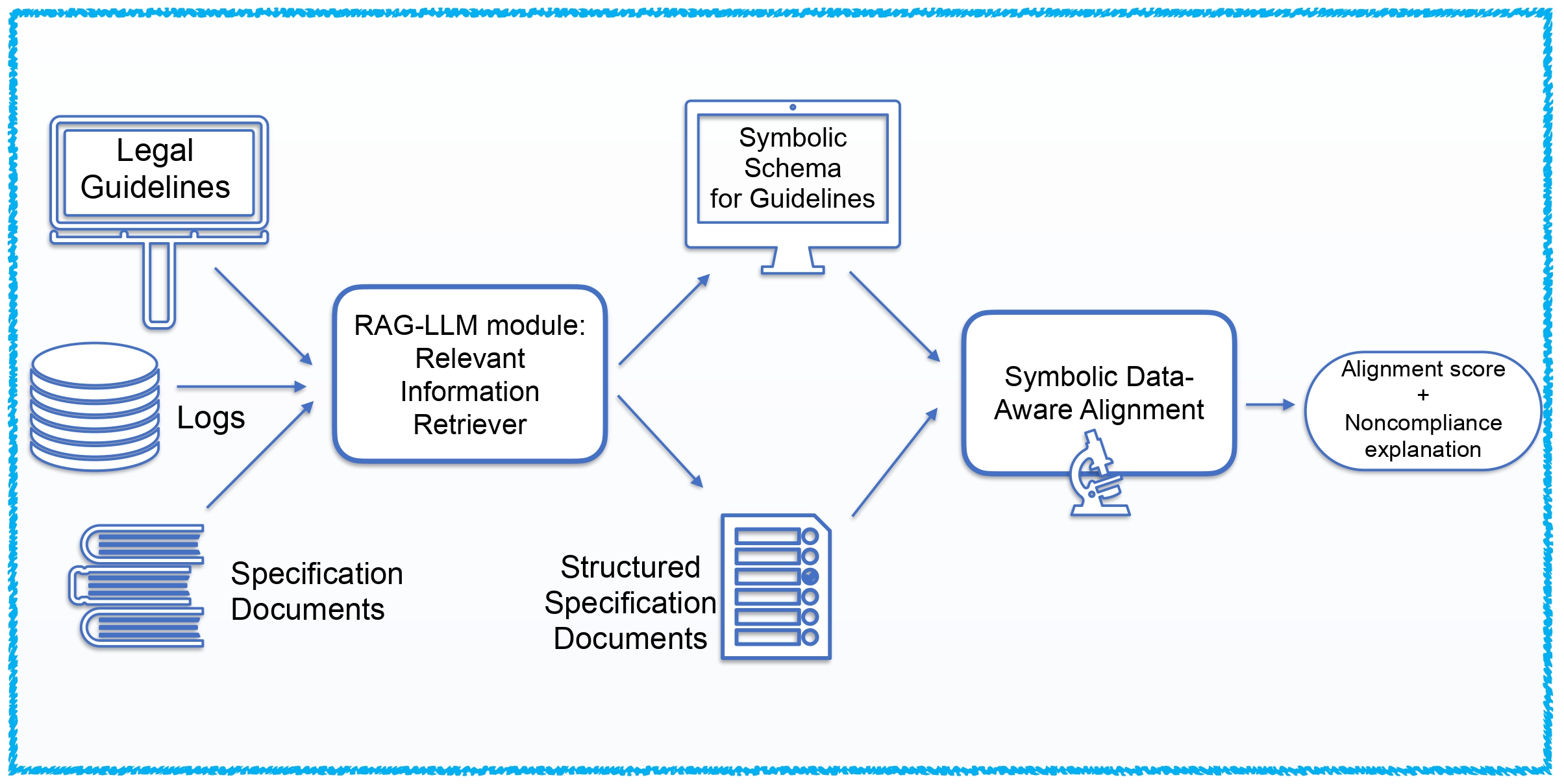
This project proposes a general-purpose, log-based compliance method, which consists of aligning enriched specification documents with normative guidelines, inspired by symbolic techniques in data-aware declarative PM. LLMs are used to preprocess textual documents, converting them into structured symbolic representations, in order to enable symbolic alignment. The approach involves (i) defining a symbolic formalism for expressing process constraints, (ii) extracting and structuring legal and specification data using LLMs, and (iii) computing alignment scores that quantify compliance.
A pilot on ICT governance in Portuguese public entities will assess the alignment between enterprise architecture specifications and national ICT guidelines (Decree-Law 107/2012). In collaboration with ARTE and IGFEJ public administrations, this initiative aims to enhance compliance, improve efficiency, and support better public service delivery.
General Goal: To align contractual specification documents of PA processes (e.g., document defining technological requirements) with legal guidelines
The project is structured in 4 phases:
Beyond the publications listed below, we report here the links to the two main technical reports of the project:
The project contributions resulted also in the following 5 MSc theses and 1 PIC2 document:
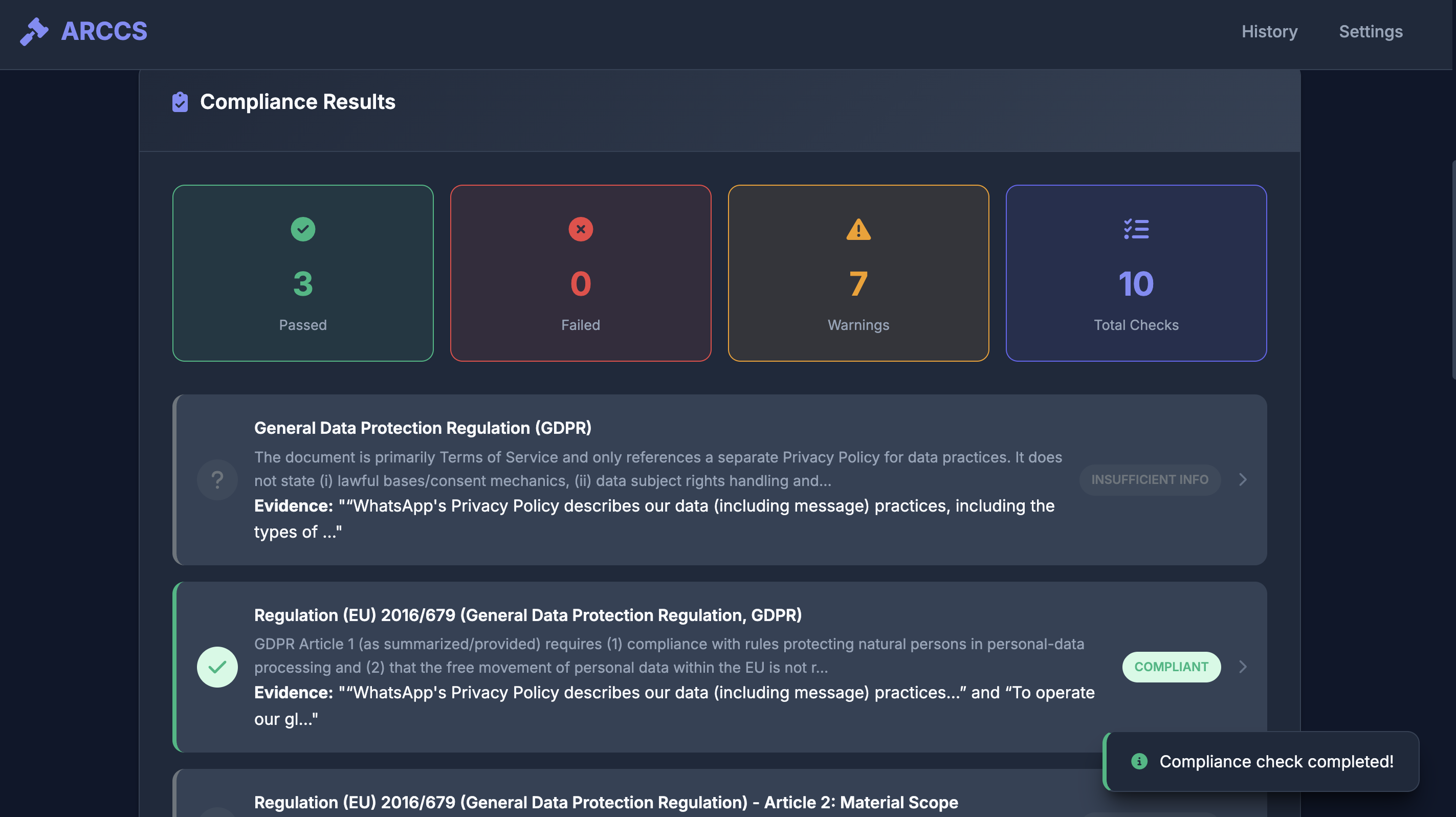
The following video presents a demo of the ARCCS web interface:

Principal Investigator - Local Coordinator at INESC-ID. Professor Auxiliar, INESC-ID/Instituto Superior Técnico, Universidade de Lisboa

Local Coordinator at Instituto de Telecomunicações. Professor Auxiliar, Instituto de Telecomunicaçœes/Instituto Superior Técnico, Universidade de Lisboa




Master's student, INESC-ID/Instituto Superior Técnico, Universidade de Lisboa

Master's student, INESC-ID/Instituto Superior Técnico, Universidade de Lisboa




Postdoctoral Researcher. Instituto de Telecomunicações
Master's student. Instituto de Telecomunicações/Instituto Superior Técnico, Universidade de Lisboa

Master's student. Instituto de Telecomunicações/Instituto Superior Técnico, Universidade de Lisboa
Master's student. Instituto de Telecomunicações/Instituto Superior Técnico, Universidade de Lisboa
Master's student. Instituto de Telecomunicações/Instituto Superior Técnico, Universidade de Lisboa

Agência para a Reforma Tecnológica do Estado, I.P. (Agency for Technological Reform of the State, - ARTE) is the public institute responsible for directing, coordinating, and implementing the technological transformation and digitalization of Public Administration in Portugal, operating under the supervision and authority of the Ministry of State Reform.
ARTE was established in 2025 as part of the restructuring of the Agência para a Modernização Administrativa (Agency for Administrative Modernization - AMA), with the aim of promoting administrative modernization and simplification, ensuring system and data interoperability, implementing cybersecurity and data policies, integrating emerging technologies, coordinating the omnichannel and in-person service network, and strengthening the digital skills of Portuguese society, working in close cooperation with all entities of the Public Administration.

The Instituto de Gestão Financeira e Equipamentos da Justiça (Institute for Financial Management and Justice Equipment - IGFEJ) manages the financial, property, and technological resources of the Ministry of Justice in Portugal. It is a public institute, endowed with administrative and financial autonomy and its own assets, which carries out the responsibilities of the Ministry of Justice under its supervision and authority.
It was created in 2012, is part of the State’s indirect administration, and has jurisdiction over the entire national territory. It plays a central role within the Ministry of Justice, providing essential services for the proper functioning of the judicial system. The IGFEJ operates in several areas that cut across the Ministry of Justice, namely budgetary and financial management, assets and construction, technological infrastructure, and information systems.